
Materiality Assessment
Materiality Assessment
Process for determining material assessment (GRI 2-14, GRI 3-1)
The Company has established a process to analyze and assess material sustainability topics to ensure alignment with its business operations, stakeholder expectations, and potential impacts that may affect the Company’s long-term value. This process covers activities across the entire value chain, taking into account the Company’s business objectives and strategic direction, as well as key trends and relevant internal and external factors that may influence both positive and negative impacts on the Company’s operations.
The assessment of material sustainability topics is conducted in accordance with the Global Reporting Initiative Standards (GRI Standards). In addition, the Company considers the alignment of these topics with the United Nations Sustainable Development Goals (SDGs) and applies the concept of Double Materiality (and the principle of double materiality). The process consists of the following steps:

Identification of sustainability topics

Assessment of the significance of impacts

Prioritization of material topics

Review and validation
Materiality Assessment Diagram
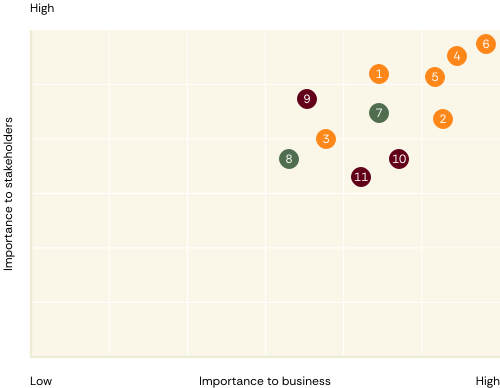
- 1 Good Corporate Governance, Business Ethics, Anti-Corruption, and Compliance with Laws, Regulations, and Requirements
- 2 Risk Management and Business Continuity Planning (BCP) to Address Crisis Situations Comprehensively
- 3 Information Security and Data Privacy Management
- 4 Quality, Safety, and Organic Integrity of Vegetable Products
- 5 Supply Chain Management and Sustainable Procurement
- 6 Customer and Consumer Relationship Management
- 7 Organic Waste and Food Waste Management from Farms and Retail Outlets
- 8 Efficient Energy, Climate Change, and Water Resource Management
- 9 Respect for Human Rights in the Supply Chain
- 10 Employee Well-being and Quality of Life Development
- 11 Community and Social Development through Inclusive Engagement
The Company has identified key sustainability issues, along with the associated value chain and relevant stakeholders, including the long-term targets for each topic, as outlined below:
Economic
Value Chain
- Procurement of raw materials
- Production Management
- Distribution and Inventory Management
- Delivery of products and services
- Customer Relations Management
- Supporting activities
Stakeholders
- Shareholders/Investors
- Suppliers
- Environment/Communities
- Customers/Consumers
- Employees
- Financial Institutions
5 years Long-term sustainability target (2027-2031)
- Maintain zero significant regulatory warnings or sanctions
- Achieve and maintain an “Excellent” level of corporate governance rating
SDGs

GRI
- GRI 2
- GRI 205
- GRI 415
Value Chain
- Procurement of raw materials
- Production Management
- Distribution and Inventory Management
- Delivery of products and services
- Customer Relations Management
- Supporting activities
Stakeholders
- Shareholders/Investors
- Suppliers
- Environment/Communities
- Customers/Consumers
- Employees
5 years Long-term sustainability target (2027-2031)
- Achieve 100% ERM coverage across all business units
- Ensure that BCPs are established and tested at least annually
SDGs
GRI
- GRI 2
- GRI 3
Value Chain
- Supporting activities
Stakeholders
- Shareholders/Investors
- Suppliers
- Customers/Consumers
- Employees
5 years Long-term sustainability target (2027-2031)
- Maintain zero significant data breaches
- Ensure no substantiated complaints from regulators, customers, or other stakeholders regarding the misuse of personal data
- Ensure that 100% of employees complete training on cybersecurity and data privacy
SDGs
GRI
- GRI 418
Value Chain
- Procurement of raw materials
- Production Management
- Distribution and Inventory Management
- Delivery of products and services
- Customer Relations Management
Stakeholders
- Shareholders/Investors
- Suppliers
- Environment/Communities
- Customers/Consumers
5 years Long-term sustainability target (2027-2031)
- Zero significant food safety complaints
SDGs
GRI
- GRI 416
- GRI 417
Value Chain
- Procurement of raw materials
- Production Management
- Distribution and Inventory Management
- Delivery of products and services
- Supporting activities
Stakeholders
- Shareholders/Investors
- Suppliers
- Environment/Communities
- Financial Institutions
5 years Long-term sustainability target (2027-2031)
- Ensure key suppliers are assessed in alignment with ESG principles and the Supplier Code of Conduct
- Conduct assessments of critical suppliers at least once per year
SDGs
GRI
- GRI 2
- GRI 308
- GRI 414
Value Chain
- Distribution and Inventory Management
- Delivery of products and services
- Supporting activities
Stakeholders
- Shareholders/Investors
- Customers/Consumers
- Employees
5 years Long-term sustainability target (2027-2031)
- Build trust by delivering high-quality service to customers and consumers
- Promote the development of safe products and services that address the needs of diverse stakeholders
- Enhance repeat rate through continuous improvement of customer experience and CRM initiatives
- Expand the membership base to achieve a meaningful contribution to overall company revenue
SDGs
GRI
- GRI 417
- GRI 418
Environmental
Value Chain
- Procurement of raw materials
- Production Management
- Distribution and Inventory Management
- Delivery of products and services
- Customer Relations Management
- Supporting activities
Stakeholders
- Shareholders/Investors
- Suppliers
- Environment/Communities
- Customers/Consumers
- Employees
5 years Long-term sustainability target (2027-2031)
- Reduce food waste at the outlet level through continuous improvement
- Enhance the recovery and utilization of organic waste (e.g., composting, recycling)
- Minimize food waste throughout the supply chain
- Move toward zero waste to landfill
- Implement comprehensive waste management practices across all business operations
SDGs

GRI
- GRI 305
- GRI 306
Value Chain
- Procurement of raw materials
- Production Management
- Distribution and Inventory Management
- Delivery of products and services
- Customer Relations Management
- Supporting activities
Stakeholders
- Shareholders/Investors
- Suppliers
- Environment/Communities
- Customers/Consumers
- Employees
5 years Long-term sustainability target (2027-2031)
- Improve energy efficiency to reduce environmental impact
- Continuously reduce greenhouse gas emissions, balancing business growth with sustainability
- Manage water resources responsibly and efficiently
- Promote the transition toward renewable energy in the long term
SDGs

GRI
- GRI 302
- GRI 303
- GRI 305
Social
Value Chain
- Procurement of raw materials
- Production Management
- Distribution and Inventory Management
- Delivery of products and services
- Customer Relations Management
- Supporting activities
Stakeholders
- Shareholders/Investors
- Suppliers
- Environment/Communities
- Customers/Consumers
- Employees
5 years Long-term sustainability target (2027-2031)
- Ensure continuous human rights due diligence for key suppliers
- Conduct business in accordance with human rights principles and proactively prevent significant violations
- Encourage key suppliers to acknowledge and comply with the company’s human rights policies
- Enhance the capabilities of procurement-related employees in human rights practices
SDGs

GRI
- GRI 2
- GRI 406
- GRI 408
- GRI 409
- GRI 410
- GRI 411
- GRI 414
Value Chain
- Procurement of raw materials
- Production Management
- Distribution and Inventory Management
- Delivery of products and services
- Customer Relations Management
- Supporting activities
Stakeholders
- Shareholders/Investors
- Suppliers
- Environment/Communities
- Customers/Consumers
- Employees
5 years Long-term sustainability target (2027-2031)
- Cultivate a culture that strengthens employee engagement and overall well-being
- Advance workforce capabilities through continuous learning and development
- Foster a supportive work environment that enables employee retention and growth
- Strengthening occupational health and safety standards to sustainably reduce workplace incidents
SDGs
GRI
- GRI 2
- GRI 201
- GRI 401
- GRI 403
- GRI 404
Value Chain
- Procurement of raw materials
- Production Management
- Distribution and Inventory Management
- Delivery of products and services
- Customer Relations Management
- Supporting activities
Stakeholders
- Shareholders/Investors
- Suppliers
- Environment/Communities
- Customers/Consumers
- Employees
5 years Long-term sustainability target (2027-2031)
- Provide community training and capacity-building programs at least once per year
- Support farmers and local communities through sustainable initiatives
- Continuously implement community development programs
- Monitor and assess the impact of key community projects as appropriate
SDGs
GRI
- GRI 201
- GRI 413