
Stakeholder Engagement
Stakeholder Engagement
Value Chain and Stakeholders
The activities are connected to Company’s key stakeholder groups as follows:
| Value Chain | Stakeholders | |||||
|---|---|---|---|---|---|---|
| Shareholders/Investors | Employees | Customers/Consumers | Business Partners | Environment/Community | Financial Institutions | |
| Raw Material Procurement | ||||||
| Production Management | ||||||
| Product Distribution and Inventory Management | ||||||
| Marketing, Sales, and Service | ||||||
| Customer Relationship Management | ||||||
| Supporting Activities | ||||||
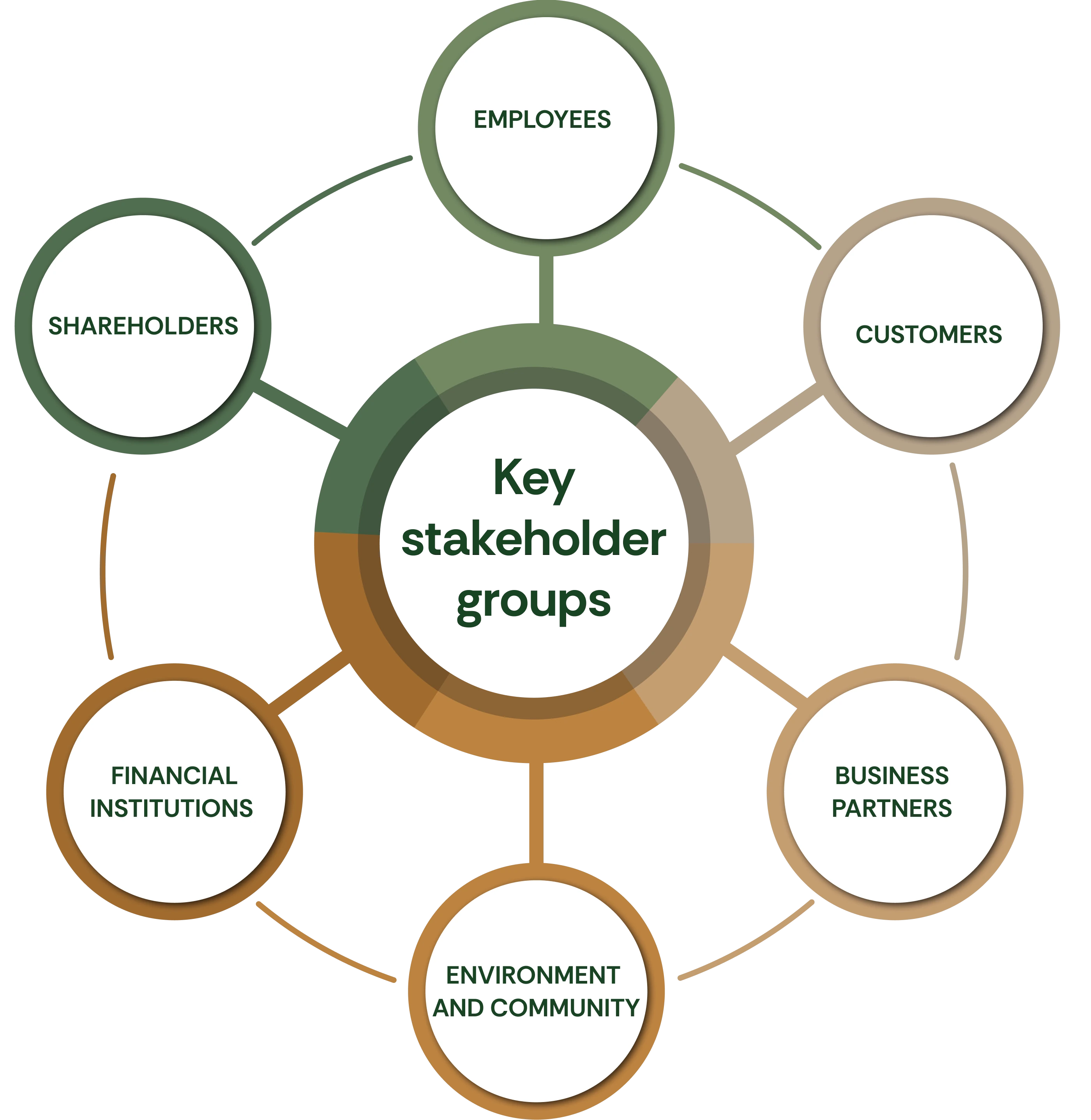
Company’s main stakeholders are divided into 6 groups, consisting of:
Business Value Chain
The Company places significant emphasis on managing its business value chain, recognizing the importance of all stakeholder groups. The following details outline the primary and supporting activities within our value chain:
Primary Activities

Raw Material Procurement
Core Operations
- Strategic planning, agricultural operations, monitoring, harvesting, and quality control in organic farming processes
- Selecting partners based on reliability, quality, pricing, delivery conditions, and payment terms
- Ensuring fair and transparent partner interactions
- Strategically planning material procurement to secure adequate and appropriate quantities
- Supporting local agricultural communities by sourcing materials from regional farmers to generate income and improve community living standards

Production Management
Core Operations
- Meticulously planning, controlling, verifying food preparation and product manufacturing processes and ensuring international-standard quality and safety protocols
- Optimizing resource utilization and minimizing environmental impact
- Conducting ongoing research and menu development to address consumer health requirements

Product Distribution and Inventory Management
Core Operations
- Precise transportation and distribution planning to meet customer demands across various branches
- Temperature-controlled transportation and storage to maintain product quality and freshness
- Implementing efficient, traceable transport and inventory management systems
- Selecting logistics providers with demonstrated expertise and reliability

Marketing, Sales, and Service
Core Operations
- Targeted communication to enhance brand awareness, loyalty, and engagement
- Establishing customer confidence in ingredient, food, and product quality
- Implementing fair and appropriate pricing strategies
- Delivering high-standard services that generate customer satisfaction

Customer Relationship Management
Core Operations
- Developing membership and point accumulation systems to encourage repeat purchases
- Creating interactive customer engagement activities
Supporting Activities

Accounting and Financial Management
Core Operations
- Developing appropriate budgetary plans aligned with company objectives
- Maintaining rigorous, transparent, and auditable financial systems
- Utilizing reliable accounting processes to ensure accurate financial reporting
- Timely and comprehensive financial information disclosure
Quality Assurance and Control
Core Operations
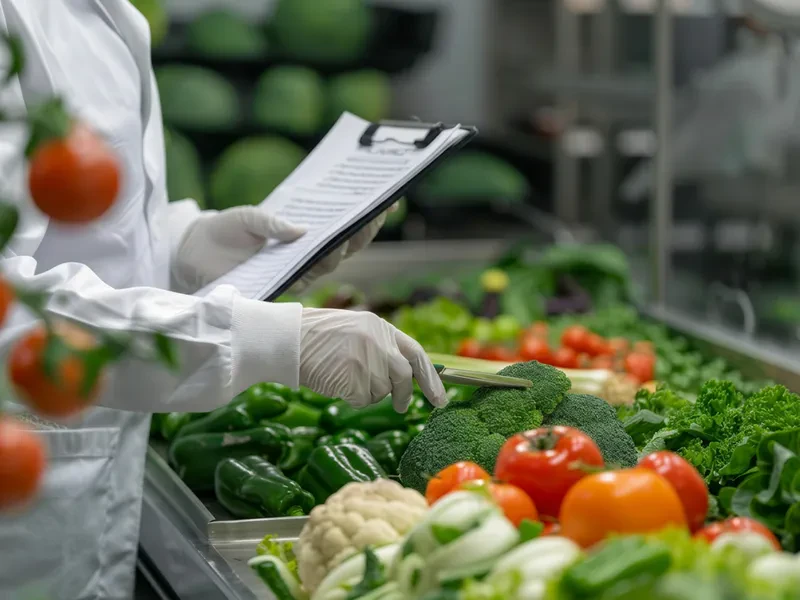
- Establishing stringent standards for raw material, production, product, and service inspections
- Ensuring consistent quality across food, products, and service offerings

Human Resource Management
Core Operations
- Recruiting talent aligned with job requirements and providing competitive, industry-standard compensation
- Encouraging regular skills training and development
- Supporting employee welfare through appropriate workplace equipment and resources

Information Technology Management
Core Operations
- Procuring high-quality equipment and software supporting operational processes
- Maintaining secure, continuous network and technological infrastructure
Stakeholder Analysis within the Business Value Chain
Internal Stakeholders
Stakeholder Groups:
Shareholders
Stakeholders’ Expectations:
- Strong financial performance and sustainable growth
- Fair and equitable shareholder treatment
- Accurate, comprehensive, and timely information disclosure
- Good corporate governance
Response to Stakeholders’ Expectations:
- Regular performance reporting and annual report publication
- Annual shareholders' meeting organization
- Conducting business with transparency, efficiency, and adherence to corporate governance policies and ethical business conduct
Stakeholder Groups:
Employees
Stakeholders’ Expectations:
- Long-term compensation and welfare benefits
- Professional capability development and career progression
- High-quality work life with workplace satisfaction
- Equal treatment
- Physical and mental workplace wellness
Response to Stakeholders’ Expectations:
- Establishing safety and occupational health guidelines
- Promoting employee knowledge development through relevant training programs
- Implementing an inclusive human resource policy that embraces workforce diversity
- Defining competitive salary structures and industry-aligned benefits
- Developing succession planning for critical roles and career pathways
External Stakeholders
Stakeholder Groups:
Customers
Stakeholders’ Expectations:
- High-quality, standardized, fresh, and safe raw materials, food production, and product processes
- Transparent and fair customer treatment
- Fair and reasonable product and service pricing
- Accurate and comprehensive product information
- Product and service accessibility
- Environmental consciousness and food safety commitment
- Continuous product quality and diversity development
- Customer confidentiality maintenance
Response to Stakeholders’ Expectations:
- Establishing and controlling international-standard organic agriculture, food preparation, product processing, transportation, storage, and service protocols
- Regular quality monitoring and improvement of raw materials, products, and services
- Training employees on production processes and product knowledge
- Implementing transparent pricing strategies
- Providing complaint and suggestion channels
- Developing customer relationship-building activities
- Implementing appropriate customer data protection measures
Stakeholder Groups:
Business Partners
Stakeholders’ Expectations:
- Systematic, fair, and transparent procurement processes
- Clear and equal product information for competitive pricing
- Contractual compliance and timely payment
- Collaborative quality improvement in procurement processes
Response to Stakeholders’ Expectations:
- Defining procurement policies with fair and appropriate processes
- Maintaining honest, transparent, and equitable procurement practices
- Providing necessary business-aligned training
- Conducting regular partner evaluations and feedback sessions
Stakeholder Groups:
Environment and Community
Stakeholders’ Expectations:
- Prevention of environmental and community impacts from agricultural and production processes
- Enhanced community quality of life
- Job creation and social equity through knowledge and resource sharing
Response to Stakeholders’ Expectations:
- Emphasizing organic agricultural practices
- Efficient resource utilization with minimal environmental and social impact
- Participating in community-beneficial activities
- Providing organic farming knowledge and support
- Creating local employment and income opportunities
Stakeholder Groups:
Financial Institutions
Stakeholders’ Expectations:
- Effective financial management and punctual loan and interest repayments
- Full compliance with contractual conditions
Response to Stakeholders’ Expectations:
- Strategic business and cash flow planning
- Strict adherence to loan repayment schedules and contractual obligations