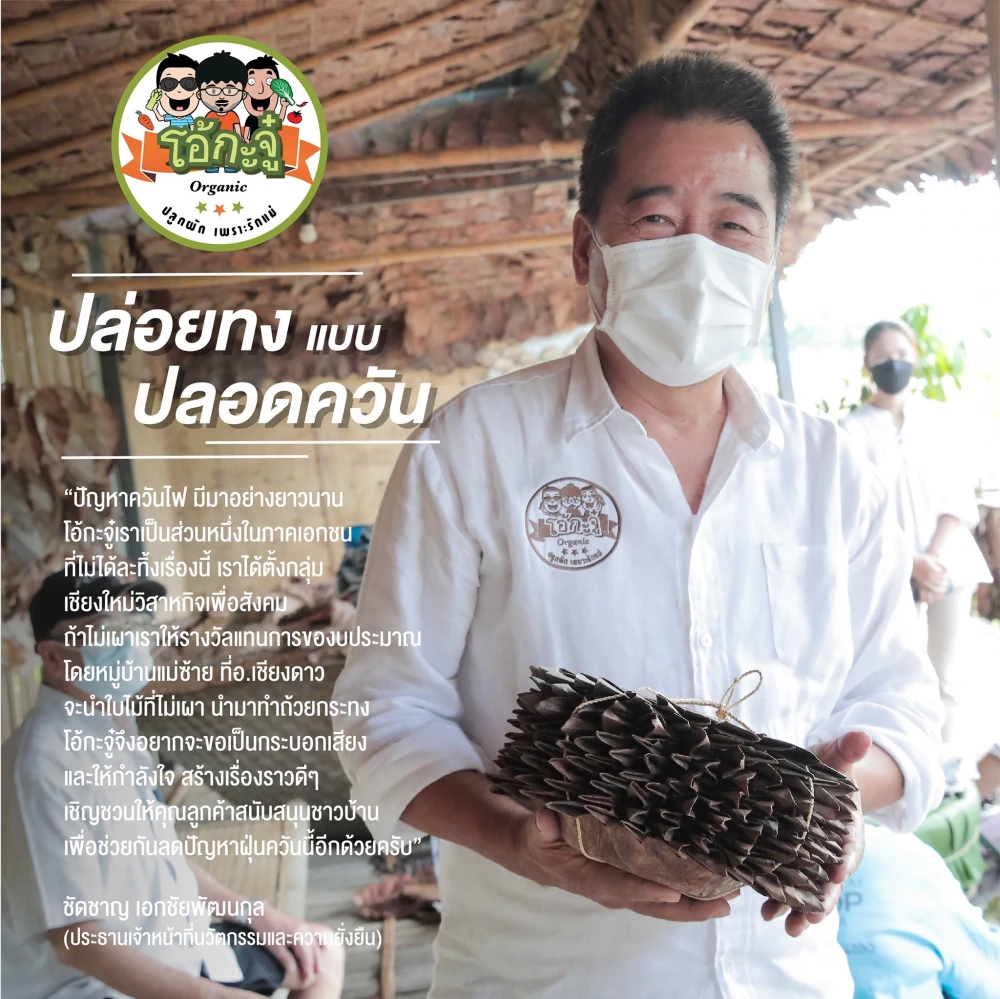
Incentive program for villages that refrain from burning
Project Overview
To conserve and restore natural resources while engaging with communities across all sectors.
Project Lead
Khun Jirayuth Puwapoonpol
Timeline
From 2021 onwards
Budget
50,000 THB per village (in-kind rewards instead of cash)
Alignment with Corporate Vision, Mission & Policy
Giving Back to Society
Background & Rationale:
Northern Thailand has faced haze pollution for more than a decade, with the situation becoming significantly more severe over the past two to three years. Between February and April each year, haze covers the region, causing several northern provinces to rank among the cities with the worst air pollution in the world. The primary causes are agricultural burning and forest fires, which contribute to transboundary haze. Most fires result from burning corn residues following the expansion of highland maize cultivation, sugarcane fields before harvest, and rice stubble to prepare land for the next planting season. Burning is widely regarded as the most cost-effective method because it is inexpensive, quick, and easy. In addition, traditional burning practices continue in some highland communities, based on the belief that they improve the growth of forest products such as grazing grass, edible vegetables, and mushrooms.
During the 2020 haze season, the problem emerged earlier than in previous years and became more severe, with a significant increase in hotspots within protected forest areas, reflecting illegal burning driven by complex local issues. Even areas close to Chiang Mai, such as Doi Suthep, experienced visible smoke almost every day.
Haze pollution has had widespread impacts on quality of life, public health, and the economy across Northern Thailand. The number of patients suffering from respiratory diseases, cardiovascular diseases, skin conditions, and eye disorders has continued to increase each year, resulting in higher household expenses for medical treatment and protective equipment. Businesses, including retail stores and restaurants, have also been affected as people reduce outdoor activities. The tourism sector has experienced similar impacts, with domestic tourist arrivals declining rapidly during the haze season due to widespread public awareness of air quality conditions. International tourist arrivals also slowed, and tourism revenue was estimated to have declined by at least THB 4 billion. Although the tourism downturn in 2020 was primarily driven by the COVID-19 pandemic, haze pollution would likely have remained a major challenge for Northern Thailand. Looking ahead, as domestic tourism continues to recover, another severe haze season could once again disrupt businesses throughout the region.
Objectives:
To help prevent haze pollution in Northern Thailand.
To promote public awareness and support long-term solutions to haze pollution.
To raise community awareness of the harmful effects of haze and air pollution.
To develop leadership skills, encourage doing what is right, and promote teamwork.
To encourage communities to recognize the importance of preventing forest burning.
Key Targets
To reduce haze pollution in Northern Thailand by protecting upstream watershed areas.
Area of Implementation
Northern Thailand communities (Mae Chaem)
Key Activities
Establish a Community Social Enterprise (CSE) group to address the issue.
Implement a "No Burning, No Haze" incentive program across 16 villages.
Use satellite technology to monitor heat hotspots within participating villages.
Provide rewards based on each village's needs instead of cash to encourage sustainable community development.
Sponsorship
-
Expected Outcome
Haze pollution was reduced.
Community members became more aware of the harmful effects of forest burning.
Community members helped instill environmental awareness in younger generations, emphasizing the importance of preventing forest burning.